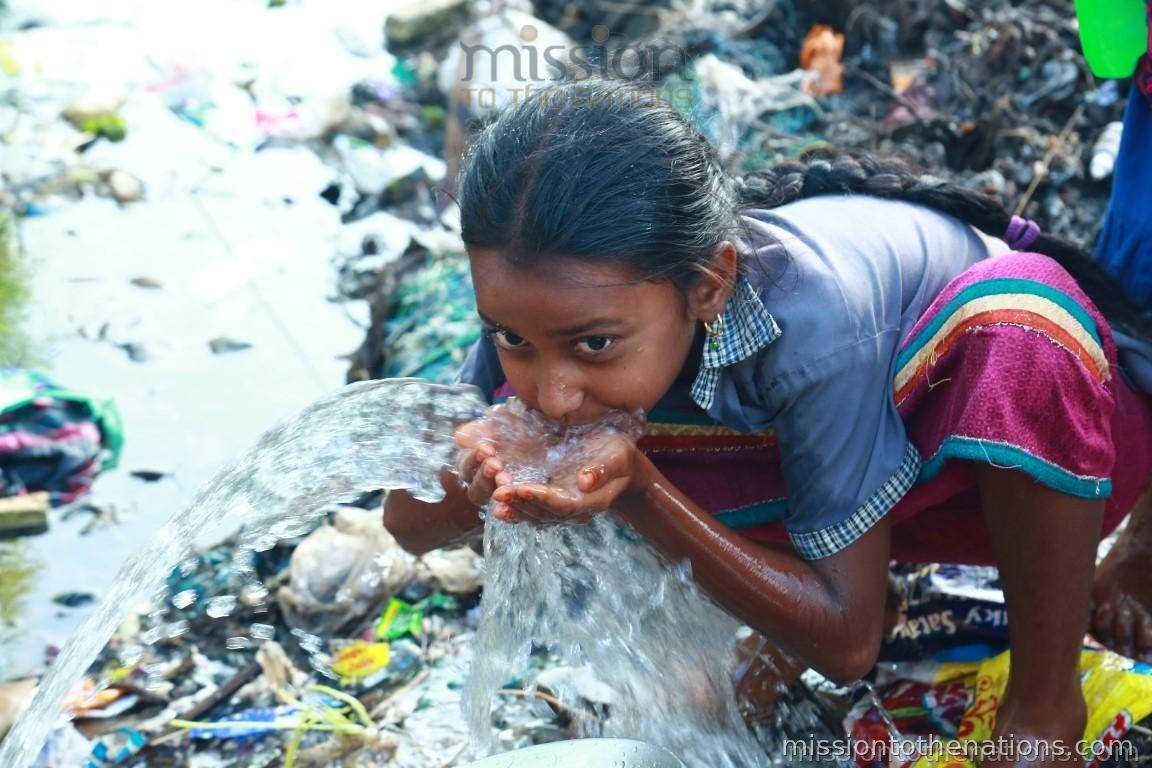
This is the only water Neeraja's family had. She is cupping it in her hands from a drain surrounded by garbage. She is thirsty.
No borewell. No pipe. No option. A child farm labourer and her mother filling pots from a waste-choked canal — because there was nothing else. A single well changed what water means for this family.
“We did not know water could look like that — clear, clean, no smell. We had never had it before.”
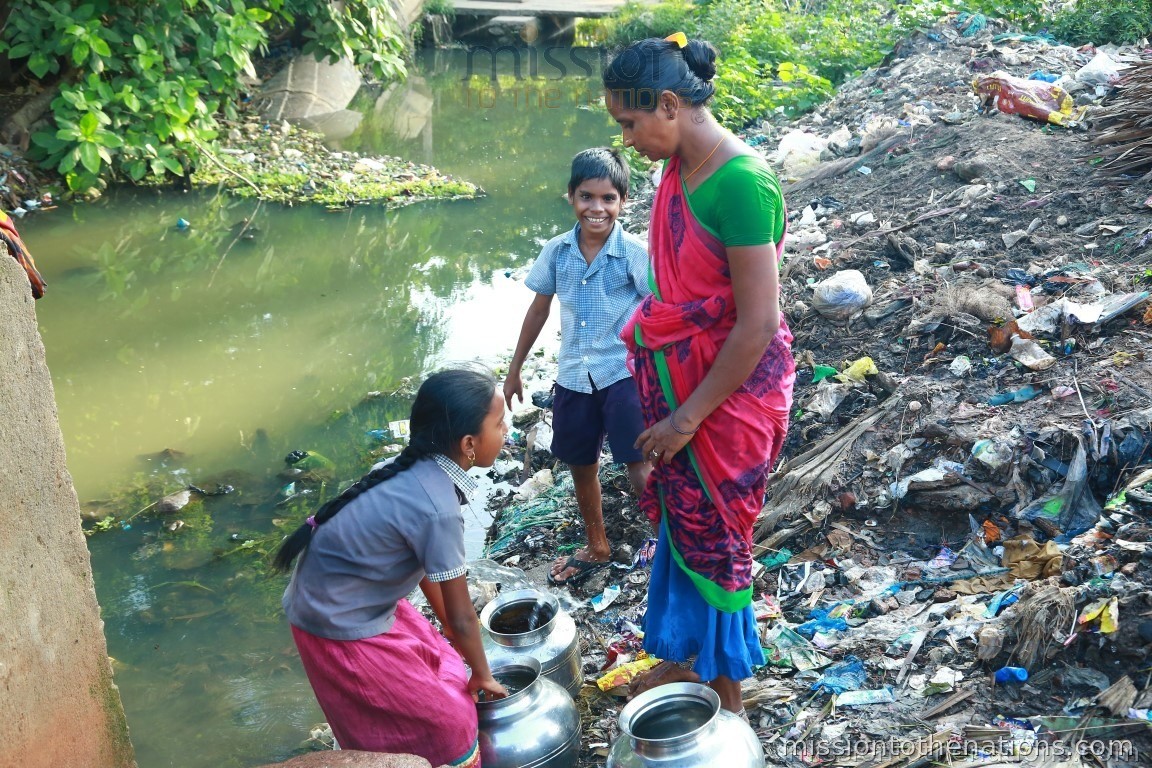
The photograph was taken by an MTN field worker on a routine community survey. He almost did not stop. It was midday. The canal ran alongside a track he had walked before. Then he saw them — a woman in a red saree and two girls, filling steel pots from the water running at their feet.
He stopped because of what was in the water. Plastic wrappers, rotting waste, the green of stagnant algae along the banks. And the younger girl — crouching at the edge, cupping the water in both hands, drinking directly from it. She looked up at the camera without embarrassment or surprise. This was just water. This was what water looked like.
Neeraja was not in school. She worked on a farm in the mornings — planting, weeding, whatever the season required. Her family lived close enough to the canal that it had always been their source. When the rains came it ran faster and dirtier. In the dry months it slowed to almost nothing and they collected what they could. There was no pipe. No government connection. No borewell anywhere near them.
The field worker sat with the mother that afternoon. She told him: the children get sick from the water, we know this. But what do we do? This is what we have.
MTN drilled a borewell thirty metres from their home three months later. The installation took two days. The water came up cold and clear. Neeraja's mother filled a steel pot and held it up to the light before she drank from it. She had never seen their water look like that before.
The canal is still there. They do not use it any more.
Neeraja's case was referred to MTN's child welfare team. The conversation about school had started. Whether she goes back — and stays — depends on more than a well. But the well is where it begins. You cannot build anything on a foundation of waterborne illness and a canal that smells of waste. You start with the water.
- •Family with no access to clean water — nearest safe source several kilometres away
- •Daily water collected from a garbage-filled drainage canal
- •Neeraja, a child farm labourer, working fields instead of attending school
- •Waterborne illness a recurring reality — diarrhoea, stomach infections
- •No government water supply; no borewell within reach
- →MTN borewell installed in the community — drilling, hand pump, concrete platform
- →Safe water access from 30 metres away for the first time
- →Cost to the family: zero
- →Neeraja connected to MTN's child welfare team for follow-up on school enrolment
- ✓Family collecting clean water from the borewell daily — canal no longer used
- ✓Waterborne illness incidents dropped sharply within months
- ✓Neeraja referred for school enrolment support through MTN's child welfare programme
Name has been changed to protect privacy. Statistics are reported by programme teams and reviewed at our annual audit.