A village of 180 households — from 3 km for water to 30 metres from every door
180 households were sharing a pond with cattle. A borewell, a hand pump, and a trained women's committee changed that.
“Before this we were always carrying water. Now we decide what to do with our morning.”
Every morning, before anything else, the women walked. Three kilometres to the nearest borewell, then three kilometres back, two clay pots balanced on their heads. They did this twice a day. In the dry months, when the nearest source ran low, they went further. The walk was so much a part of the day that most of them had stopped thinking of it as something that could be different.
The pond in the village had water. The cattle drank from it. Children played at its edge. And when there was no time for the long walk and the need was urgent — a sick child, a fever, something that needed washing now — people used the pond. They knew what was in it. They used it anyway.
Twelve children under five had diarrhoeal illness in an average month. That number was so steady it had started to feel like weather — something that came, was managed, and came again.
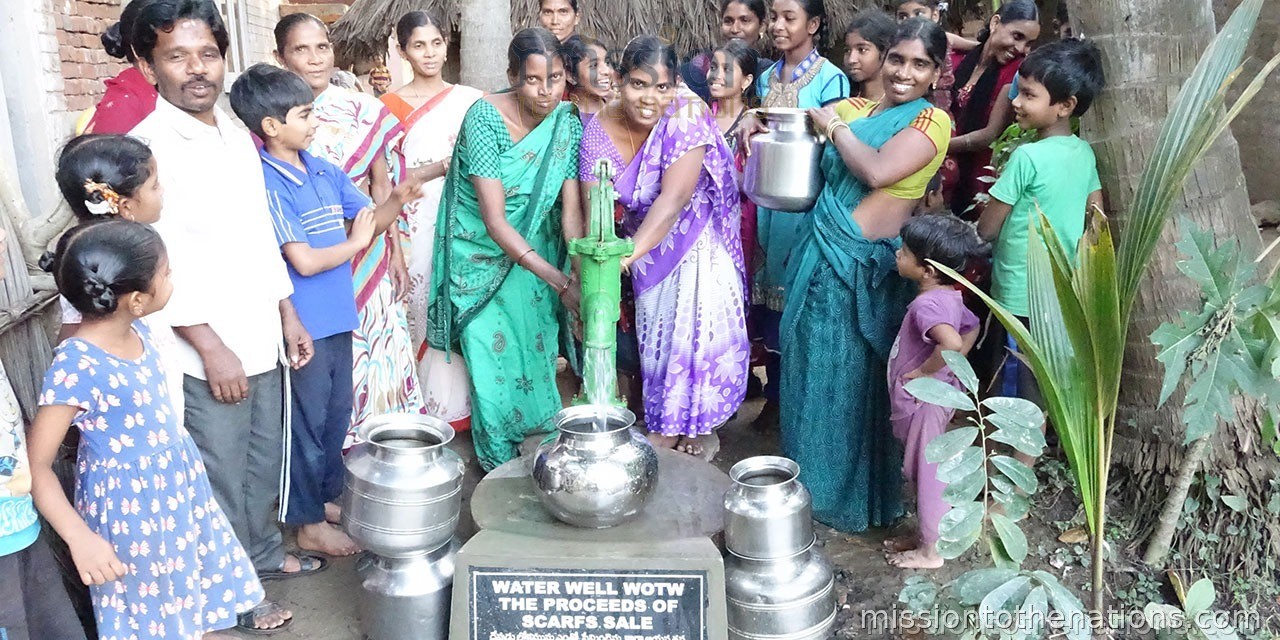
The money that drilled this well came from scarves. Women in MTN's sewing programme had been producing scarves through their livelihood training — sold, and the proceeds set aside. When there was enough, the MTN team identified this village, sank a borewell thirty metres deep, and installed a hand pump on a concrete platform. The village men helped with the digging and the concrete work. A small plank was fixed to the pump. It says where the money came from: the proceeds of scarves, made by women who had once needed exactly the kind of help this well now provides.
Six women from the village were trained to maintain it — how to check the seals, clear a blockage, keep the records, teach the next person.
Three months after the pump went in, diarrhoeal cases among children under five dropped from twelve a month to two.
The women who had walked six kilometres a day now had two and a half hours back. Some took on piece work. Some rested. One woman told the field worker she had started a kitchen garden with the time — she had always wanted to, but the water walk had taken the morning.
The pump is still running. The committee maintains it. No one has called for outside help in three years.
One programme funded another. The scarves are still selling. The well is still working.
- •180 households sharing a pond also used by cattle
- •Women walking 3 km each way for water, twice a day
- •Diarrhoeal cases in children under 5: ~12/month
- •Girls' school attendance falling sharply in dry months
- →Borewell + hand pump installed 2021, funded by proceeds from MTN's women's sewing programme — scarves sold, well drilled
- →Platform, drainage, and fencing built with village labour
- →Women's water committee of 6 trained in maintenance and hygiene
- ✓Diarrhoeal cases: ~12/month → ~2/month within 3 months
- ✓~2.5 hours/day saved per woman
- ✓Girls' dry-season attendance improved
- ✓Pump self-maintained by the committee — no external calls in 2024
Statistics are reported by programme teams and reviewed at our annual audit.