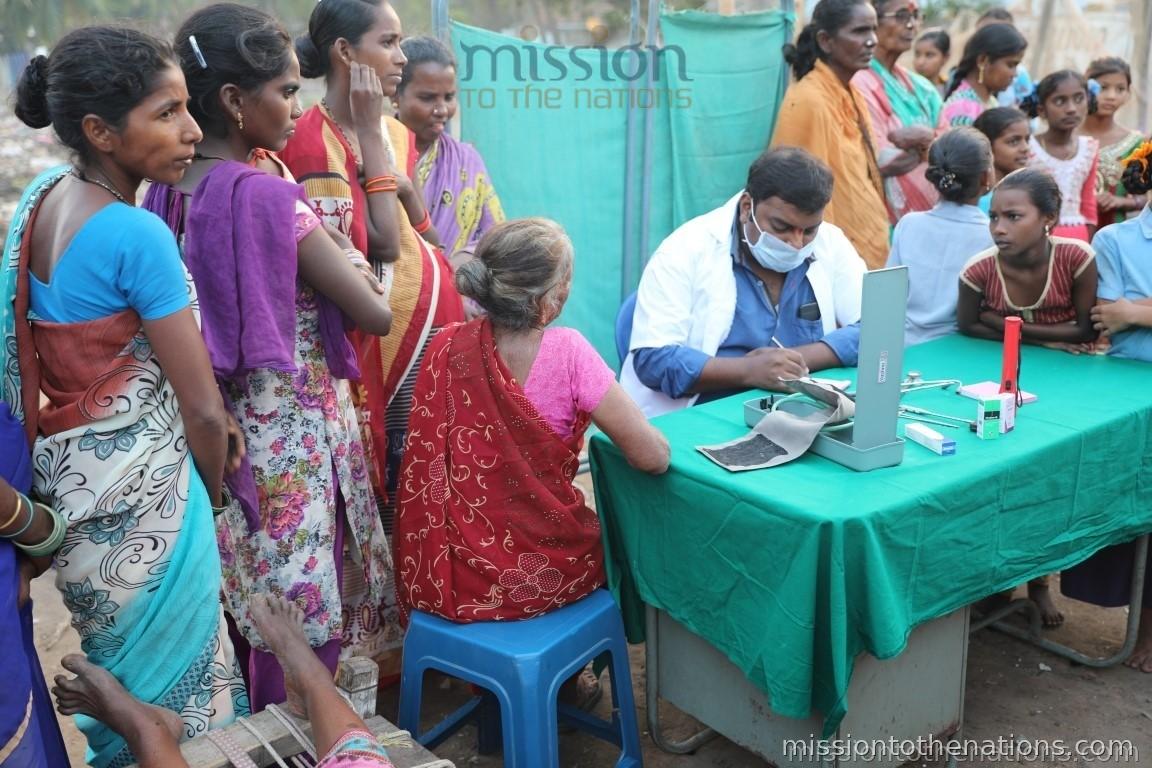
No road. No school. No toilet. The MTN van comes anyway — once a month, every month.
A village of 2,400 people reachable only by a mud track that washes out each monsoon. No functioning health centre, no school within walking distance, no sanitation. This is what a single monthly clinic has changed — and what it still cannot.
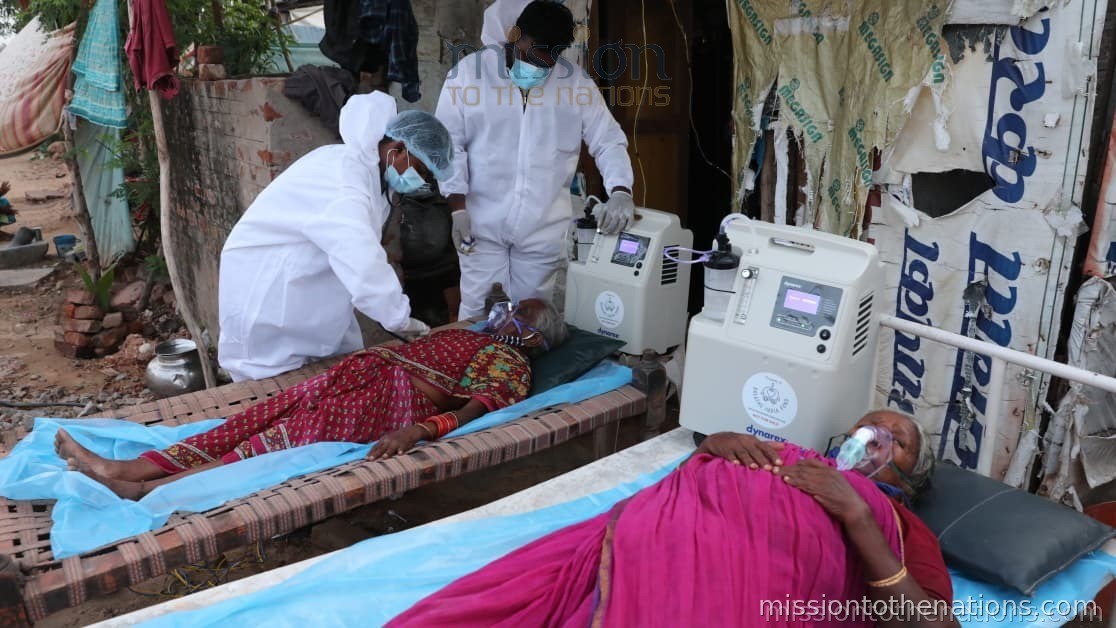
“Before, we waited until the disease was very big — too big to ignore. Now people come for the small thing. That is the change.”
The van leaves before sunrise. By the time it reaches the village — an hour and a half on a road that stops being a road about halfway through — a queue has already formed at the edge of the open ground where the clinic sets up. People have been waiting since first light. Some since before.
There is no health centre here. There was one, nominally, on a government map — a sub-centre that was built and then staffed intermittently and then not staffed at all. There is no school within walking distance. There are no toilets. The track that connects this village to the nearest town turns to mud in the rains and becomes something that trucks refuse to attempt. Families have lived here for generations. The road has always been like this.
The first time MTN's mobile clinic arrived, the field team was not sure what to expect. What they found was people with conditions that had been accumulating quietly for years. A man with blood pressure so high the reading made the nurse double-check the machine — he had not known, had had no way to know. An elderly woman who had been losing her vision to cataracts, convinced it was simply age. Two children presenting with the skin signs of chronic malnutrition. A pregnant woman in her second trimester who had never had a scan.
The clinic runs for one day. The team sees between 120 and 160 patients. Before they leave, they identify the serious cases — the ones that need the hospital, the ones that need to be watched, the ones that need a referral they would never have been able to seek on their own. Transport is arranged. Follow-ups are logged. The village health volunteer — a woman from the community trained by MTN to keep records between visits — walks the team through who she has been watching since last month.
Then the van packs up and navigates the track back out.
What has changed in five years is this: infant deaths are down from eleven in a single year to three. Sixty-three women completed a full antenatal cycle in 2024 — in 2019 it was eleven. Child immunisation is at ninety-one percent. Four people who had tuberculosis and did not know it are now on treatment.
What has not changed: the road. The school that does not exist. The toilets that are not there. The van still has to leave before sunrise to arrive in time. The queue still forms before dawn, because people have learned to be ready.
That is the measure of how much they needed this — not what has been fixed, but how early they rise to reach something they never had before.
- •2,400 residents — no paved road, no functioning government health sub-centre, no school within 4 km
- •Open defecation the norm; diarrhoeal disease among children under 5 a monthly occurrence
- •Nearest hospital 18 km away on a track that becomes impassable in the rains
- •Women delivered at home with untrained help; most pregnancies had zero antenatal scans
- •Child immunisation coverage estimated at 55%; infant deaths: 11 recorded in 2019
- •Chronic conditions — hypertension, diabetes, TB — went undiagnosed for years at a time
- →MTN mobile clinic navigates the mud track once a month — doctor, nurse, and ANM on board
- →Free consultations, basic diagnostics, antenatal care, immunisation tracking — no appointment needed
- →Iron-folic acid, deworming tablets, and BP/diabetes medication dispensed on-site
- →Serious cases identified and referred to MTN hospitals — transport arranged and covered
- →A local woman trained as village health volunteer — she keeps records and sends word when the van is coming
- →Hygiene and sanitation awareness sessions run alongside every clinic
- ✓1,850 patient-encounters in three years — many seeing a doctor for the first time in their lives
- ✓63 women completed a full antenatal cycle in 2024, up from 11 in 2019
- ✓Child immunisation coverage rose from ~55% to 91%
- ✓Infant deaths fell from 11 (2019) to 3 (2024)
- ✓Four TB cases identified and started on treatment; two hypertensive patients stabilised on medication
Statistics are reported by programme teams and reviewed at our annual audit.