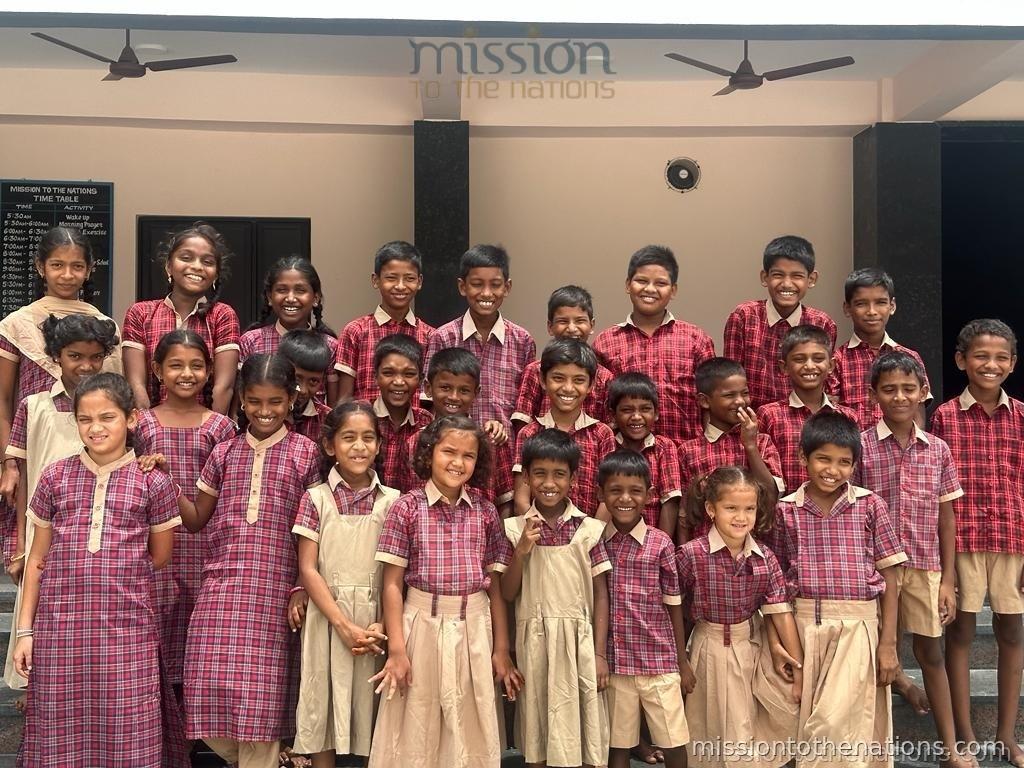
The Residential Children's Home
94 children. Active since 2018. $3.56 per child per day covers everything — a bed, a school place, three meals, and healthcare. This is what that looks like in practice.
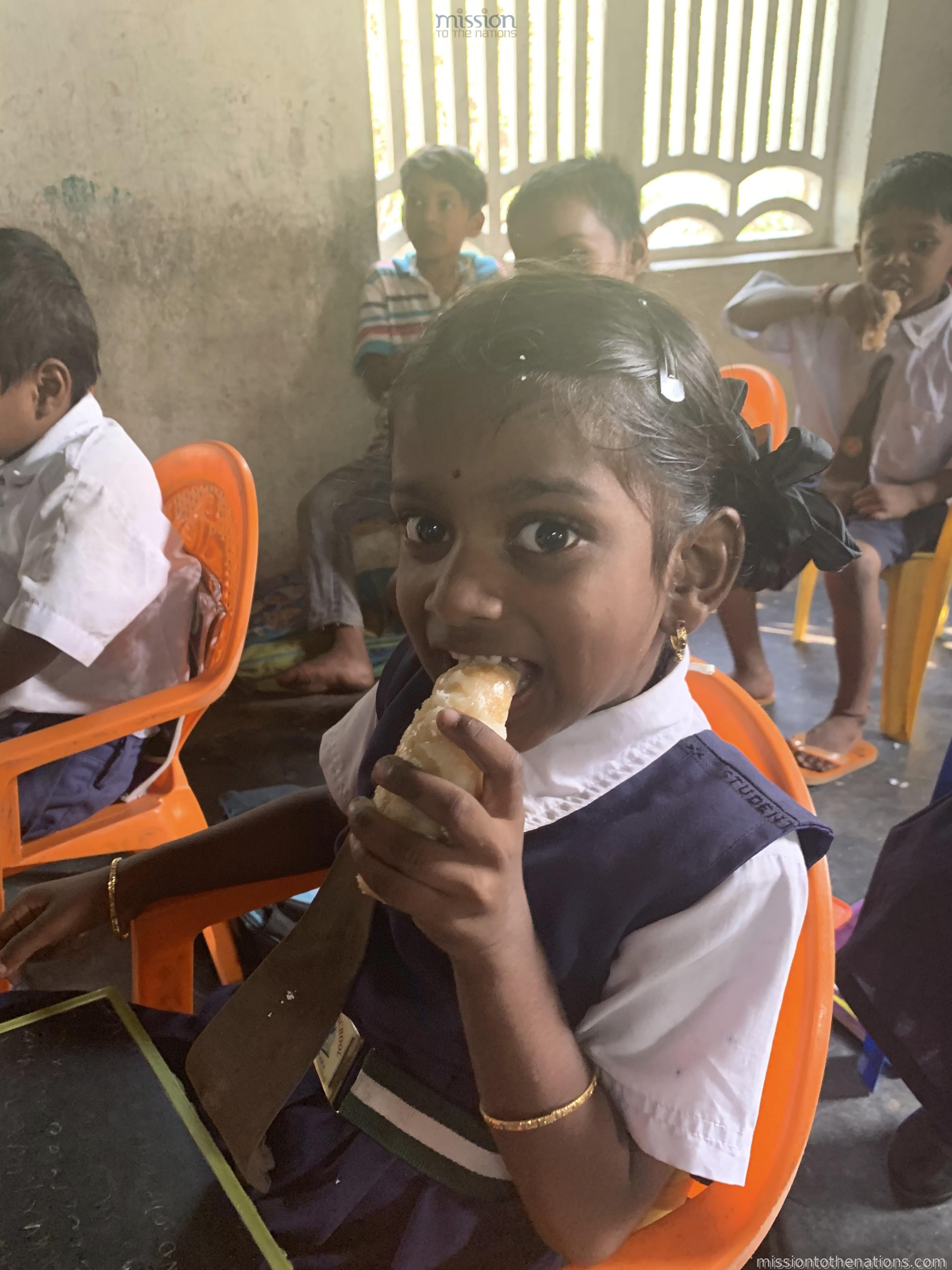
She held her cloth bag with both hands the whole time. Inside it: a photograph of her parents, and a half-eaten biscuit she had been saving. Her mother had died the year before. Her father — a truck driver on the coastal highway — had died three months after. She was four years old, malnourished, and HIV-positive. Someone had brought her to the gate.
She started treatment the month she arrived. She started school the month after. She sits next to her friend now. She does her homework every evening. She is seven years old. The cloth bag is somewhere in the dormitory — she does not carry it anymore.
She just needs her medication not to run out.
Read Amala's full story →When the pandemic hit, the home remained open without a single day of interruption. Three children were admitted in the months their parents died of COVID-related illness — with nowhere else to go and no family able to take them in. All three are enrolled in school today. The home did not become a crisis response centre. It simply stayed what it had always been: a place where the door does not close.
What the Records Show
| At Intake — 2018 | Recorded — 2025 |
|---|---|
| Majority arrived with no school enrolment record | ✓ 100% enrolled in school — no exceptions |
| Several children severely malnourished at intake | ✓ All children at healthy weight by 6-month review |
| HIV-positive children with no access to ART medication | ✓ All HIV-positive children on consistent ART under hospital supervision |
| Children arriving from street or crisis households | ✓ Stable residential care — no child has left to homelessness |
| No child had a secondary school pathway | ✓ Oldest cohort now sitting secondary examinations |
| Three children admitted during COVID with no surviving parent | ✓ All three enrolled, attending, settled |
All figures drawn from residential care registers and school enrolment records. Available for review by institutional donors on request.
Four Things Every Child Has Here
Shelter & Stability
- ✓Clean dormitories — separate sleeping areas for boys and girls, maintained to hygiene standards
- ✓House parents on site at all times — staff who know each child by name, by history, by need
- ✓A predictable daily routine — wake time, meals, study, sport, sleep. Stability is not a comfort; it is the intervention.
- ✓Full clothing provision — uniform, indoor clothes, footwear. Children arrive often with nothing.
- ✓Recreational compound — cricket, volleyball, outdoor play. A childhood is not only school and meals.
Free Schooling
- ✓Every child enrolled — none excluded, none asked to pay
- ✓Full supply of textbooks, notebooks, stationery, and a school bag for every child, every year
- ✓Dedicated study hours every evening with staff support — homework is not optional
- ✓Older children mentored by MTN alumni who returned to give back what they received
- ✓School-leavers guided toward nurse training, technical courses, and further study — the pipeline continues beyond the home
Three Meals & Healthcare
- ✓Breakfast with eggs — from MTN's on-site poultry circle, collected that morning
- ✓Lunch with fish — from the community fish pond, protein-rich and fresh
- ✓Cooked evening meal — prepared on biogas fuel from the cattle circle
- ✓Every child has access to MTN's Foundation Hospital — routine checkups, illness, emergencies, all free
- ✓HIV-positive children receive daily ART under hospital supervision — same room, same class, no segregation, full confidentiality
The Kitchen Garden
- ✓Children rotate through garden duty daily — watering, weeding, harvesting. A living classroom, not a chore.
- ✓Vegetables from the garden go directly to that day's meals — spinach, tomatoes, brinjal, coriander, seasonal greens
- ✓Reduces daily vegetable purchasing costs; the garden covers a meaningful share of fresh produce year-round
- ✓Children who grow food understand food differently — where it comes from, what it takes, why it matters
- ✓Excess produce is shared with MTN's leprosy community and street feeding stations — the home gives back to the wider network
Inside the Home
Where Every Dollar Goes
$3.56 per child per day. Here is exactly what that covers — no rounding, no estimation.
What this figure covers: Full residential care, free schooling, three meals daily, all healthcare including ART medication for HIV-positive children, clothing, and staff — not food costs alone. Figures are drawn from this specific home and will vary across MTN's programmes in different parts of Asia.
On food costs: MTN's kitchen garden and circular food systems — poultry circle (eggs), fish pond (lunch protein), cattle circle (milk and biogas fuel) — supply a meaningful share of each child's daily nutrition. The $30,000 food figure reflects supplementary purchasing only. On-site production offsets the full cost significantly; without it, the per-child daily cost would be higher.
We Build More Than One
MTN has operated residential homes across Asia since 1990. The home documented above is one of several active sites. We are building more — below is where each stands in the pipeline.
Our Next Build — $93,000 Remaining
Construction is underway on our next residential home in Asia. $187,000 has already been committed by donors. We need $93,000 more to complete the build and open the doors in 2026.
Named wing or dormitory block — your family or company name on a permanent plaque. Annual photo update. Comes with full cost report on completion.
Discuss this gift →A named classroom, dormitory room, or facility. Plaque installed at opening. Photo report sent annually. A permanent mark in a place that matters.
Discuss this gift →Every gift goes directly toward the $93,000 remaining. Your name on the donor wall at the home. Progress updates as construction moves. Open the door with us.
Donate to the build →Name a Home. Open the Doors for 100 Children.
We have identified the site for our next home in Asia. We are looking for a lead donor — a family, a foundation, or a company — to name and fund the build at $280,000. Your name on the door. 100 children inside it. A case study, ten years from now, that begins with your decision.
MTN's Integrated Field System
The home is built, staffed, and operated entirely by MTN's field teams. Healthcare is provided through our Foundation Hospital at no charge to the home. Food comes substantially from our on-site circular food systems. Community health workers identify and refer children. Every aspect of delivery is in-house — no subcontracting, full accountability.
94 Children. $3.56 a Day. The Door Is Always Open.
Sponsor one child for $100/month. Help close the gap on our next build. Or start a conversation about naming a new home. Every gift is tracked. Every child is known by name.