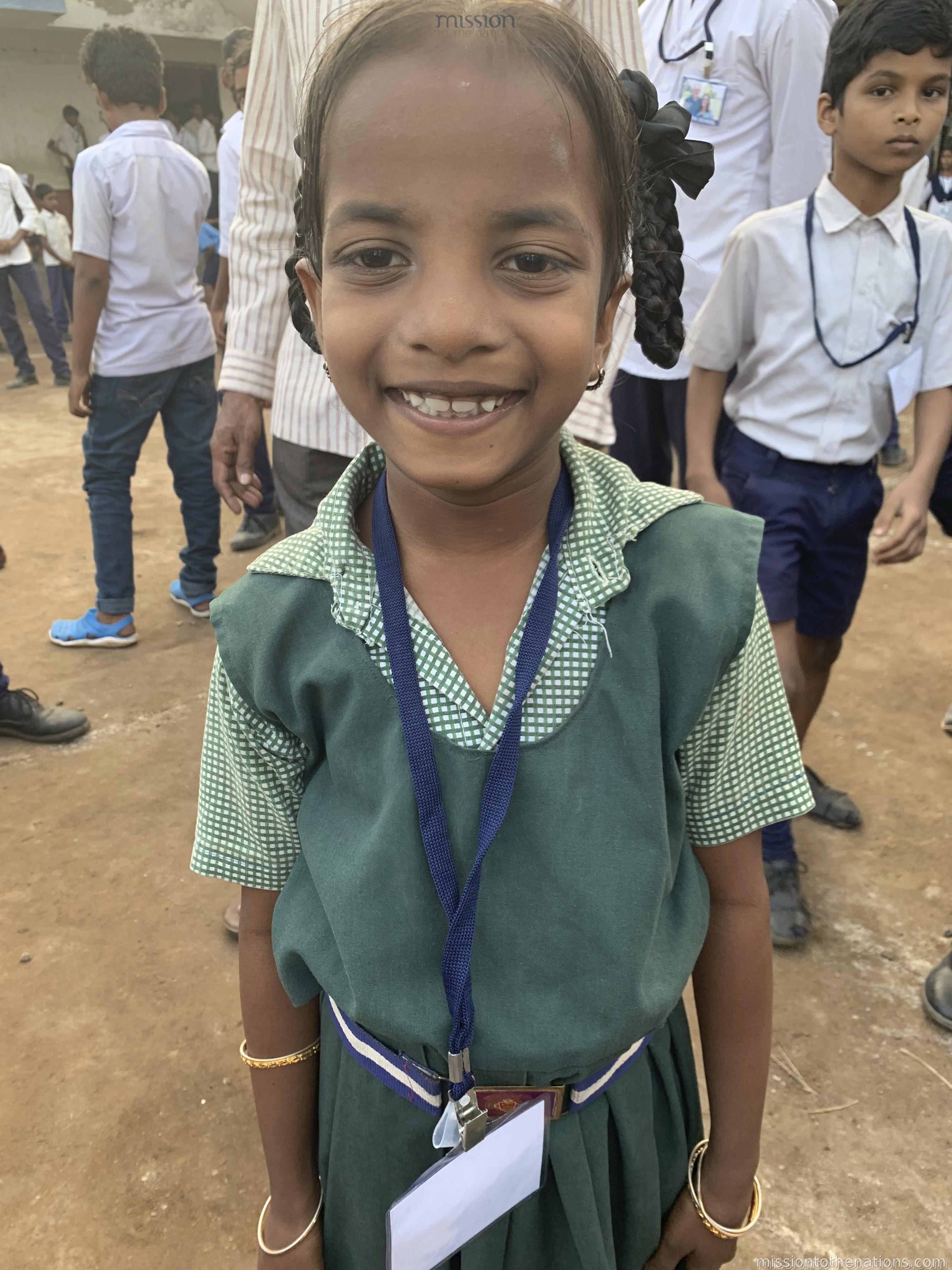
Meena was nine years old and 340 kilometres from home. She had been counting the days on the inside of her wrist. She had counted one hundred and twelve.
Hands that should have carried books were scrubbing floors in a city she could not name. An agent had come to her village with a promise and a small advance. Four months later our field team found her — locked in, unpaid, counting days on her wrist so she would not forget she was still a person.
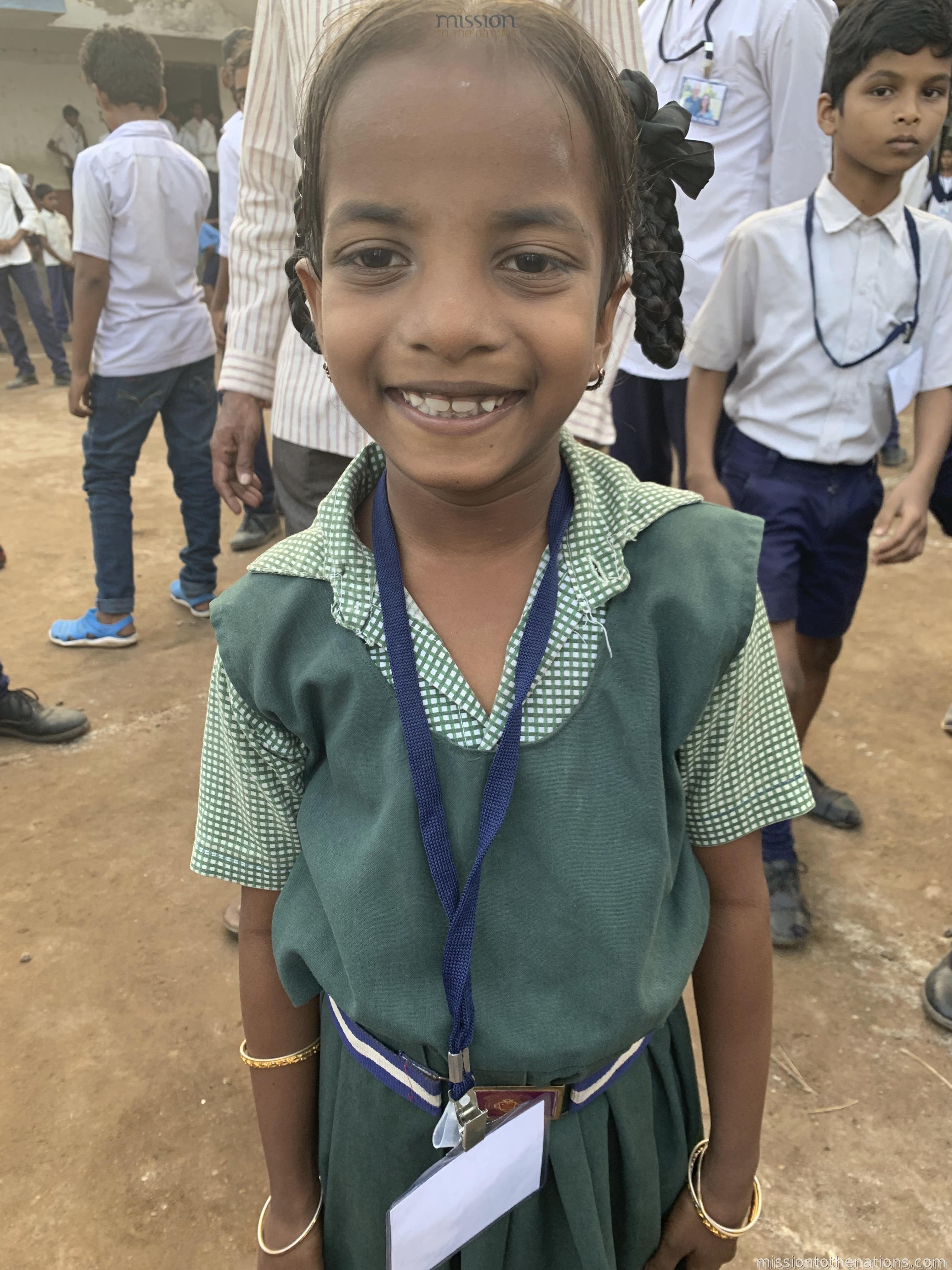
“She does not talk about that time. She talks about what she is learning in school. That is exactly where she should be.”
The agent came to the village in February. He was well-dressed. He spoke about the city, about a good family who needed help in the house, about wages that were more than Meena's father earned in a month. He had a phone. He had an advance — cash, handed over before anything was signed, which felt like trust.
Meena's parents trusted him. They did not have another option that looked as clear.
She was nine years old. She had never been further than the market town, twenty kilometres away. She did not know, when the van pulled away from the village in the early morning, that she would not see her family for four months.
These are hands that should carry books. That should be smudged with pencil, not cracked from scrubbing. That should be raised in a classroom — *I know the answer, ask me* — not wrung out over a sink before the household wakes up.
She cooked. She cleaned. She washed clothes by hand and looked after the younger children of the household. She was up before dawn and working until night. She was not paid. When she asked about the wages that had been promised, she was told she was working off the advance her family had received. The advance kept growing. The work did not stop. She was not allowed to go outside. She did not know the name of the city she was in. She did not know the address of the house.
She counted the days. She did not have a calendar. She scratched marks on the inside of her left wrist with a small stone she had found — she thought if she could count, she could hold onto time. She could prove to herself that she was still somewhere, still in days that moved forward, still a person for whom the future existed.
When our field team found her, she had counted one hundred and twelve marks.
A community social worker in the neighbourhood had noticed her through a window — too young, never outside, clearly not family. She passed the information to MTN's field contact. Within hours, community elders and MTN's child welfare team were at the door. The household did not resist. They had not expected anyone to come.
She did not speak on the journey back. She sat in the rear seat with her hands folded in her lap — those small, cracked hands — and watched the landscape move past the window. The team did not ask her to talk. They had done this before. They knew what the silence meant.
By Friday evening she had a clean bed, a hot meal, and a medical check. She ate everything on the plate. She did not leave anything.
On Monday she was sitting in a classroom. She did not know that yet — that this was school, that the other children were her age, that this would be her desk every morning. She sat very still and watched. She did not speak that day, or the next, or for the rest of that first week. The staff sat near her. They answered her questions when she asked them, and did not ask any in return. They let her watch until she was ready.
On the eighth day, she turned to the girl sitting next to her and asked if she could borrow a pencil.
She held it like it was something she had been missing for a long time. She held it like it belonged in her hand.
She is eleven now. She reads. She is working through her mathematics. She has the same bed every night, the same house parent who calls her name every morning, the same routine that tells her, day after day, that today will be like yesterday and tomorrow will be like today. For a child who spent four months not knowing what day it was, that is not a small thing.
She has started to laugh again. It comes quietly at first, and then all at once.
Her family is being assessed. The conversation about what comes next will happen when the time is right and the situation is safe. For now she is here, and here is safe, and safe is enough.
She does not talk about that time. She talks about what she is learning in school. She carries a pencil now everywhere she goes — in her pocket, or tucked behind her ear. That is exactly where she should be.
- •Age 9 — placed by an illegal domestic placement agency into a private household 340 km from home
- •Worked unpaid for four months as a house domestic — cooking, cleaning, and child care
- •Confined to the house; no schooling, no wages, no contact with family
- •Family appealed to village elders and community leaders — the agency had left no traceable address
- →Located through MTN's field network following a tip from a community social worker
- →Rescue coordinated with community elders and child welfare volunteers — same day
- →Same-day intake: medical check, clean clothing, safe housing, hot meal
- →Enrolled in MTN's residential programme immediately; school the following Monday
- →Trauma-informed care — staff gave her time and space; she began to engage on day eight
- ✓Age 11, two years into residential care and schooling
- ✓Reading at grade level; progressing steadily in mathematics
- ✓Stable placement — consistent routine, same house parent, settled in the home
- ✓Family situation under assessment; reintegration timing dependent on safety review
Name has been changed to protect privacy. Statistics are reported by programme teams and reviewed at our annual audit.