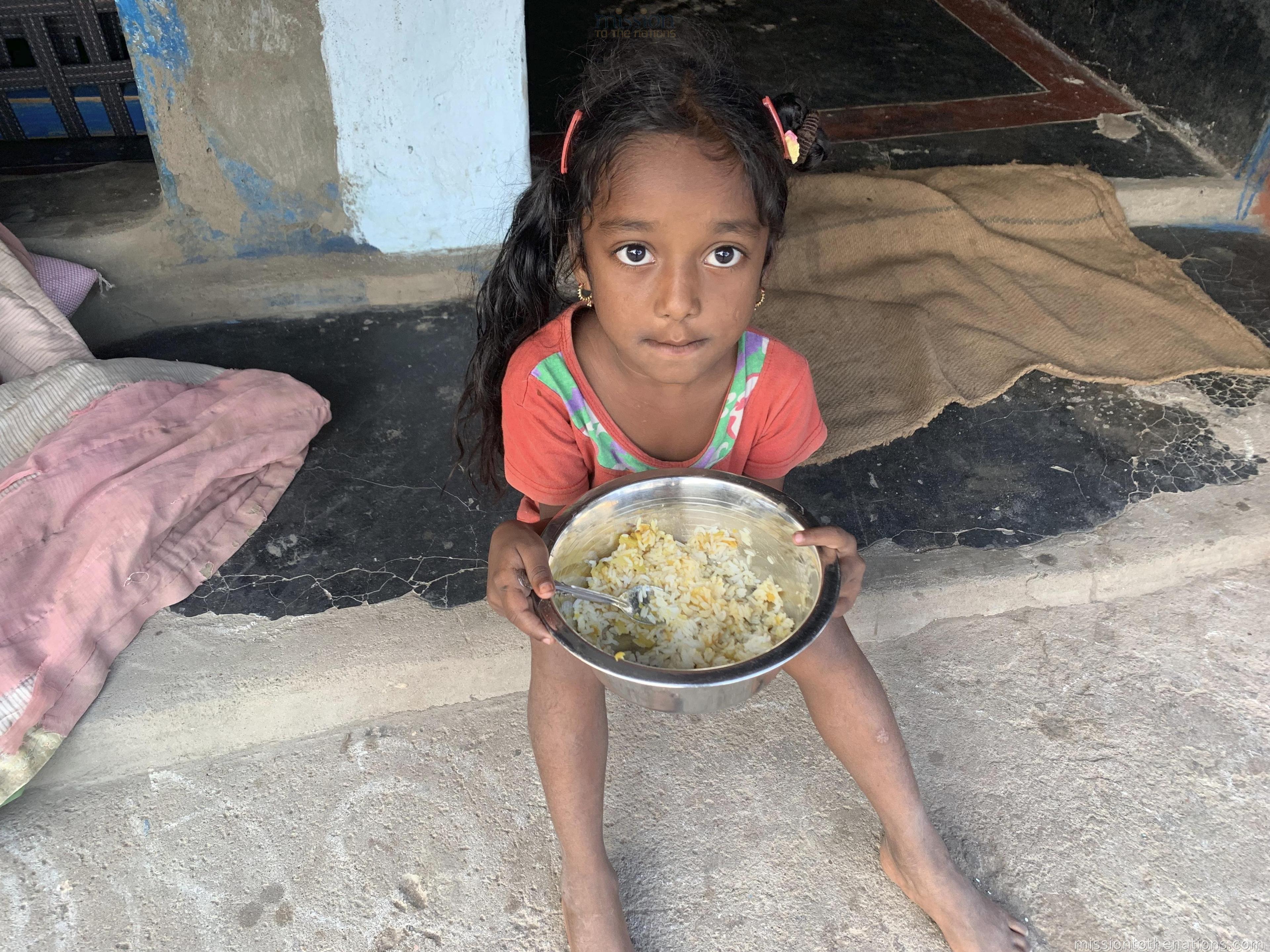
She was sitting on the doorstep with a plate. She was not sure if there would be more.
Esther was three years old. Her mother left before sunrise every day to work at the construction site. MTN's field worker found her alone, eating the last of what was in the house. That was the day the programme started.
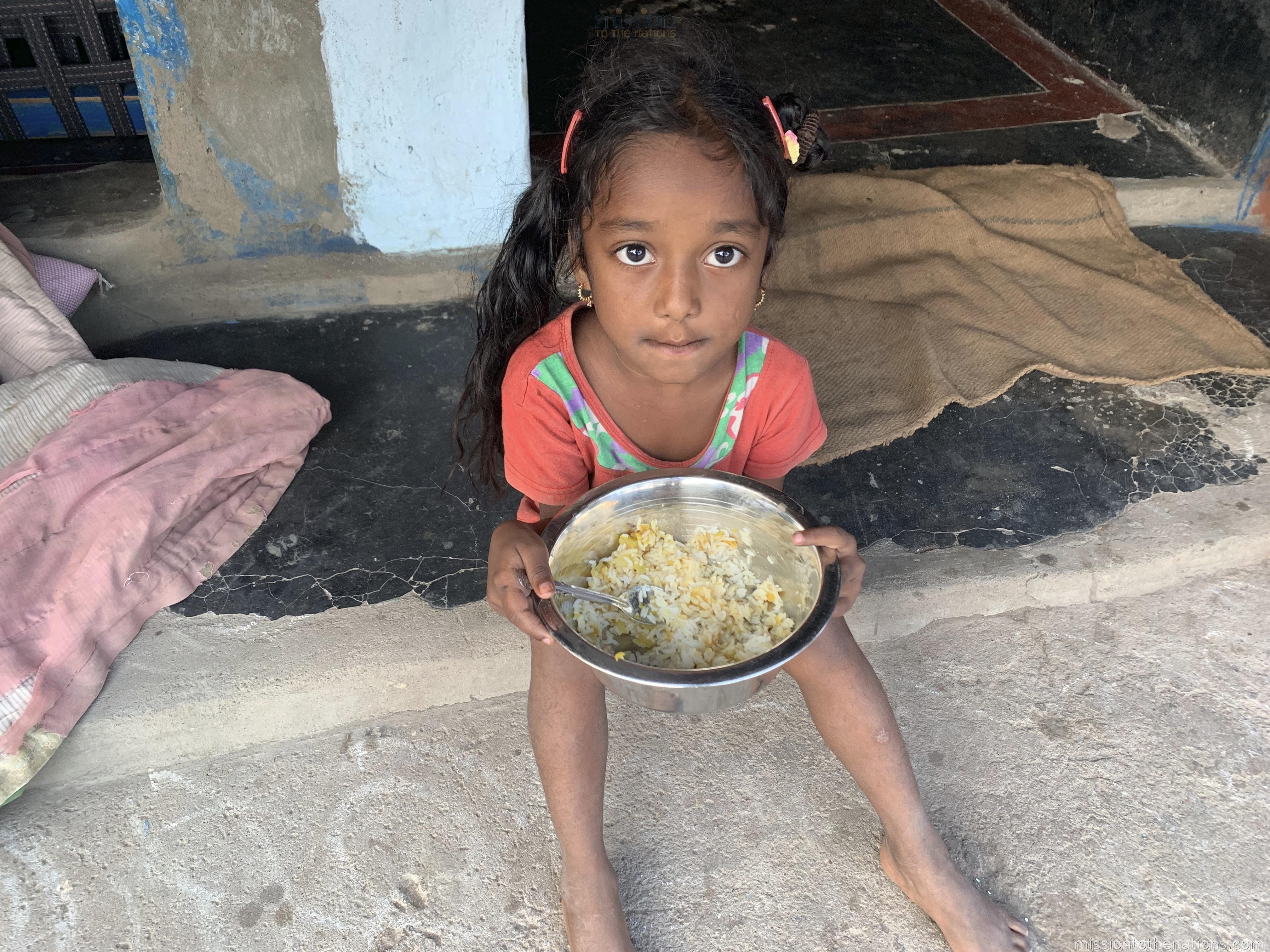
“She used to cry when I left. Now she waves. She knows there will be food.”
The field worker knocked on the door and no one answered. She knocked again. Then she heard a small sound from behind the house — not crying, just the sound of a child eating alone.
She went around the side and found Esther sitting on the back step, cross-legged, holding a steel plate on her lap. The plate had rice on it. Not much. Esther was eating slowly and carefully, the way children eat when they have learned not to rush — because rushing assumes there is enough.
She looked up when she saw the field worker. She did not seem afraid. She seemed used to adults arriving and not being sure what to do next.
The field worker sat down beside her. She asked where her mother was. Esther pointed at the road. The field worker already knew what that meant: construction work, an hour's walk each way, back after dark.
She asked how old Esther was. Three. She asked if anyone came during the day. Esther shook her head.
The field worker stayed until the rice was finished. Then she wrote down the address and came back the next morning with the first food parcel — rice, dal, oil, and a bag of fortified cereal. She enrolled Esther in the community feeding point. From that day, Esther had a meal every morning before nine.
Within four months, her weight had caught up. She started speaking in longer sentences — something the field worker noted because language delay is often the first quiet sign of nutritional deficit. She began attending the anganwadi.
Her mother, when she was told about the visit and what had been arranged, was quiet for a moment. Then she said: she used to cry when I left. Now she waves. She knows there will be food.
That is the whole story. That is the whole programme. A child who stops eating carefully because she knows the plate will not run out — and a mother who can go to work without walking away from a child who is afraid of the morning.
- •Mother, a widowed daily-wage labourer, leaves home before 6am and returns after dark
- •Esther, 3, left alone during the day with whatever food remained in the house
- •Some days there was rice. Some days there was not.
- •No neighbours available to watch her consistently; no family support nearby
- •Esther was underweight and not yet speaking in full sentences — signs of nutritional delay
- →MTN field worker identified Esther during a community nutrition door-to-door survey
- →Enrolled in MTN's street feeding programme — a guaranteed meal delivered to the community point each morning
- →Mother met with MTN's community health worker; monthly food ration added for the household
- →Esther's weight recorded fortnightly for three months; iron supplements administered
- →Mother connected to MTN's women's livelihood programme for income support
- ✓Esther's weight reached healthy range within four months
- ✓Now attends the local anganwadi (pre-school) daily — meals included
- ✓Her mother: she used to cry when I left. Now she waves. She knows there will be food.
- ✓Household food ration means the plate is never empty when Esther reaches for it
Name has been changed to protect privacy. Statistics are reported by programme teams and reviewed at our annual audit.