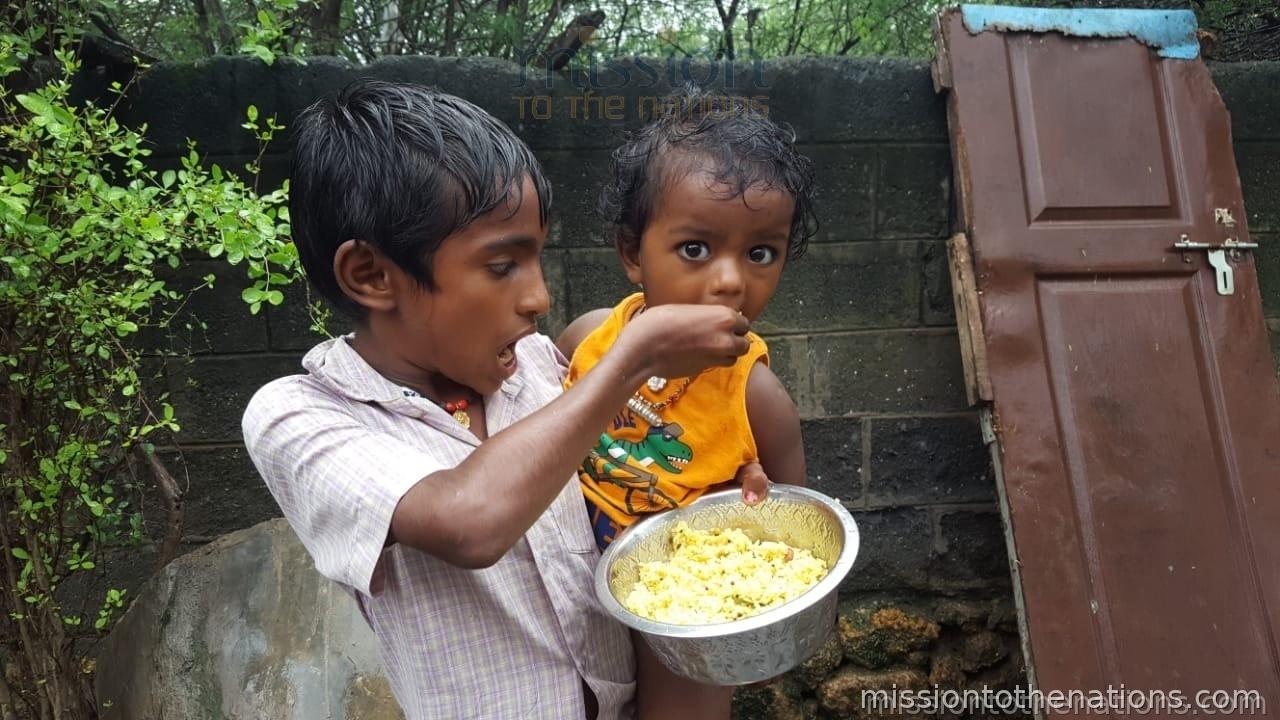
Thomas was nine years old. He was feeding his baby brother with his fingers from a shared plate.
Both parents died within weeks of each other — fever, no hospital, no warning. Thomas became the only person his brother Benjamin had left. He had one plate of food and no one to ask for more.
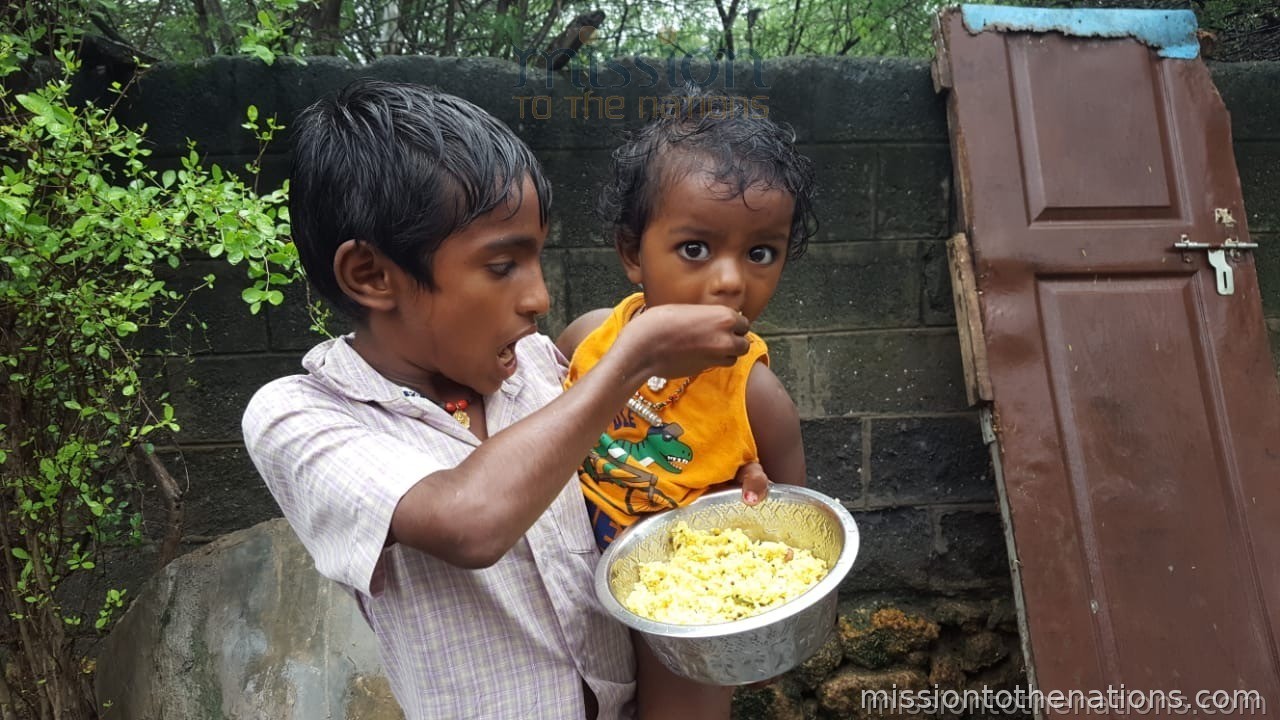
“Now Benjamin eats in the morning and I eat at school.”
The field worker knocked at nine in the morning. She almost did not — the house looked empty from the lane, the door half-open, no sound from inside.
She pushed the door and found Thomas sitting on the back step, his baby brother on his lap, feeding him from a steel plate with his fingers. He looked up and did not seem surprised to see her. Children in this situation rarely are. They have learned that adults come and go and mostly it does not change the plate.
She sat down next to him. She asked how old he was. Nine. How old is Benjamin? He thought about it. Almost two. She asked where his parents were. He looked at the floor. They are gone, he said. Both of them.
She asked how long. He said his father first, then his mother. He was quiet about it, the way children are when grief has become ordinary — not gone, just folded into the day.
She looked at the plate. There was not much on it. She asked if he had eaten. He said yes — which she understood to mean he had eaten whatever was left after Benjamin was full.
She had seen this before. Not this house, not these children — but this particular arrangement, which recurs in every community she works in. The eldest child left behind. The baby. The one plate. The quiet competence of a child doing what needs to be done because there is no one else to do it.
She wrote down their names and came back the next week with the first month's ration. Benjamin was weighed at the MTN clinic — underweight, but not severely. Thomas was connected to the school feeding programme. The community health worker began weekly visits.
Three months later, Benjamin's weight had caught up. Thomas was attending school four days a week. Asked what was different, he said: now Benjamin eats in the morning and I eat at school.
He was matter-of-fact about it. Like it was a logistics problem that had been solved. Which, in a way, is exactly what it was — and exactly what a nine-year-old should never have had to solve on his own.
- •Father died of a sudden illness when Thomas was eight; mother died three months later, cause unknown
- •Thomas, 9, became sole caregiver for his brother Benjamin, 18 months, overnight
- •No relatives nearby willing to take both children; the family house nearly empty of food
- •A neighbour gave them rice when she could. On the days she could not, Thomas ate less so Benjamin could eat more.
- •Benjamin was below weight for age; Thomas had not eaten a full meal in weeks
- •No school attendance — Thomas could not leave Benjamin alone
- →MTN field worker found the household during a post-bereavement community survey
- →Benjamin enrolled in MTN's mother and child nutrition programme — weekly weight monitoring began
- →Emergency food ration delivered immediately: rice, dal, oil, and fortified weaning food for Benjamin
- →MTN's community health worker visited weekly for three months
- →Thomas connected to MTN's school feeding programme — guaranteed meal every school day
- →Both children referred to MTN's child welfare team; care plan established with the community
- ✓Benjamin's weight normalised within three months — on track for age
- ✓Thomas back in school four days a week within six weeks of the feeding programme
- ✓Monthly food ration continues; the neighbour who fed them now helps coordinate deliveries
- ✓Thomas: now Benjamin eats in the morning and I eat at school
Name has been changed to protect privacy. Statistics are reported by programme teams and reviewed at our annual audit.