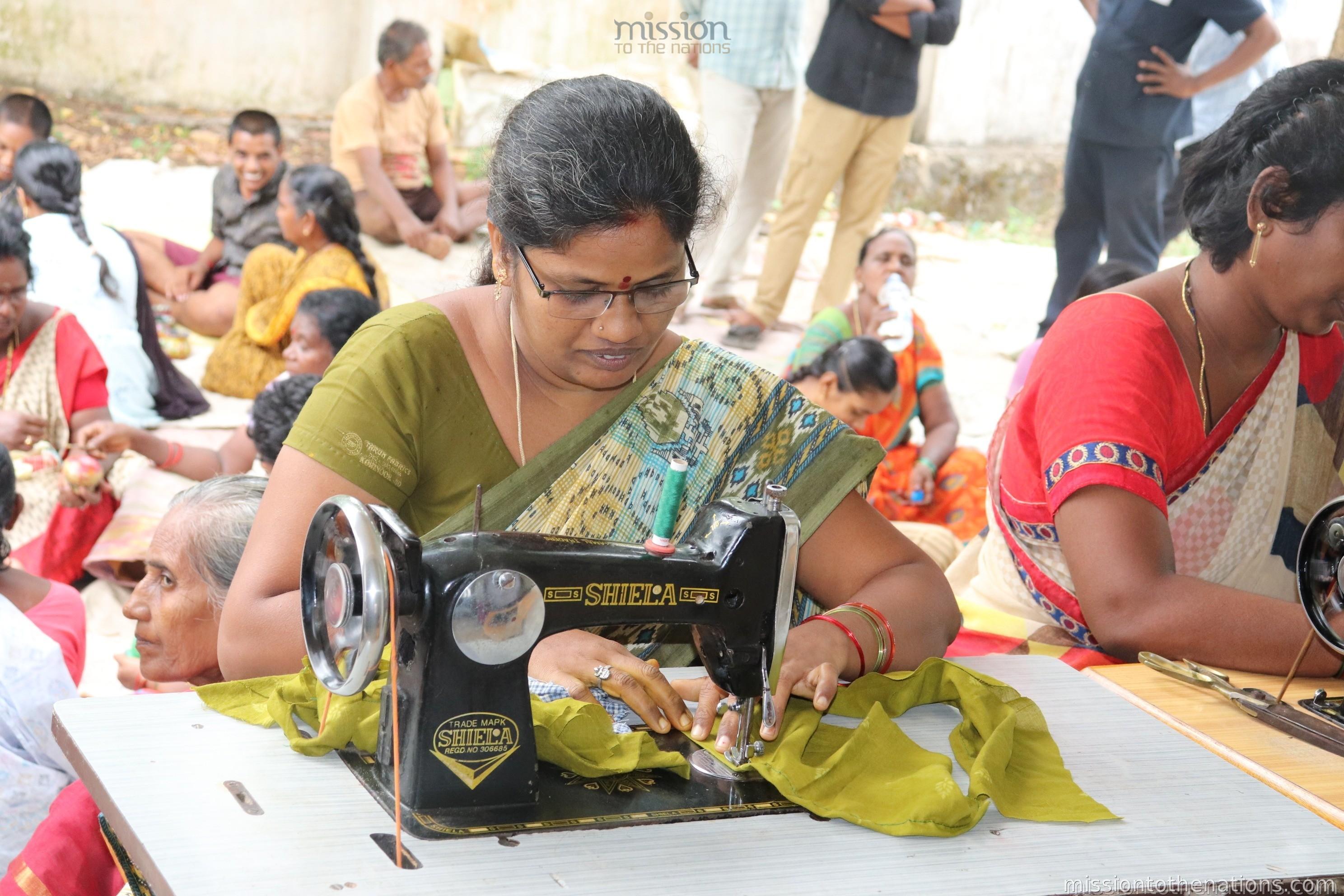
Subbamma, 52 — she went to the information session to accompany her daughter-in-law. She stayed. She enrolled.
Thirty years in the fields at ₹150 a day. At 52, she thought the door to something different had already closed. The 9-month programme showed her it had not.
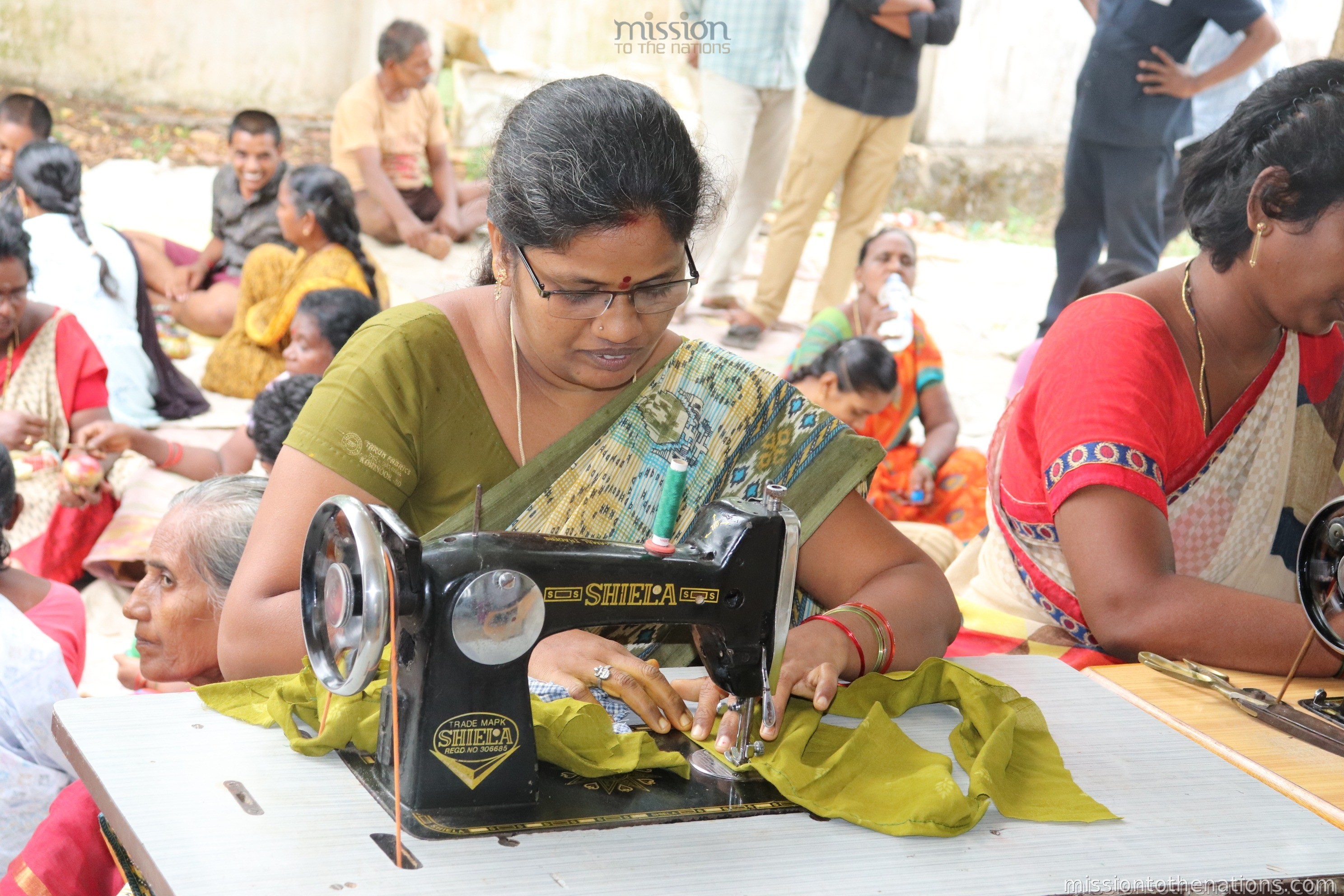
“I thought that door had already closed for me. It had not.”
She had worked other people's fields for thirty years. At 52, she knew the rhythms of agricultural labour the way she knew the lines on her own hands — which seasons paid, which did not, how long a good stretch of work could last before the rain changed or the harvest ended and the contractor stopped calling.
She did not expect anything different. That was not bitterness — it was calculation. At fifty-two, she had learned to calculate accurately.
Her daughter-in-law heard about the programme from the village health worker. She mentioned it to Subbamma one evening while they were cooking. Subbamma said she would think about it. She did not think it was for someone her age — the word "training" carried, for her, an image of younger women, of girls starting out, of people who still had thirty years ahead of them to justify the time.
They went to the information session together, early in the morning before the heat came. Subbamma sat at the back.
She listened.
By the time the session ended she had not said a word. On the walk back she was quiet. Then she said to her daughter-in-law: I am going to apply.
She does not fully know why she said it. Maybe it was the woman who ran the session — who was not young, who had not framed any of it as something you had to be a certain kind of person to do. Maybe it was something simpler: a morning away from the fields that felt, for once, like a morning where something was still possible.
She enrolled at fifty-two. She was the oldest woman in her cohort by eight years.
The first months were harder than the sewing. Her hands were more practised than she had expected — shaped by a lifetime of detailed, repetitive work, they took to the machine quickly. What was harder was the belief that she had a right to be there. That this was not something she was borrowing from her daughter-in-law, or attending on someone else's behalf, or taking time away from more serious business. The other women seemed to carry this belief easily. She had to work at it.
In month four she joined the bag-stitching production stream. Cloth bags, carry bags — faster to make, with a consistent order from a local supplier. The income was more immediate than tailoring. She understood quickly how to hold two streams at once: tailoring for the larger commissions that came in irregularly, bags for the steady weekly output that gave her a number she could count on. She had been managing unpredictable income for thirty years. She knew how to read the gaps and fill them.
She has not borrowed money from anyone in two years.
Her granddaughter's school fees are paid. Both years. She mentioned this to the field worker without ceremony — just as information, the way you report a number you have been quietly keeping track of. But the field worker had known Subbamma long enough to hear what that sentence contained.
Her husband, whose health had made fieldwork impossible for him, now manages the household during the hours she works. Neither of them had planned this arrangement. Neither of them speaks about it directly. But it works.
She told the field worker, near the end of her training year: I thought that door had already closed for me.
It had not.
- •Thirty years of agricultural day labour — planting and harvesting for ₹150 a day when work came, nothing when it did not
- •Seasonal and unpredictable — some months three weeks of work, some months four days
- •Husband's health declining; no longer able to do fieldwork, household income halved
- •Debt building quietly — borrowed from a neighbour through the previous season's shortfall
- •No income stream she could count on from week to week
- →Daughter-in-law heard about MTN's vocational programme from a village health worker; both attended the information session together
- →Subbamma enrolled at 52 — the oldest woman in her cohort by eight years
- →9-month sewing and tailoring programme: skills, business basics, and cooperative membership
- →Joined the bag-stitching production stream in month four — faster turnover, immediate weekly income
- →Business basics classes: pricing, recording orders, managing two income streams simultaneously
- ✓Two income streams running: tailoring commissions + bag-stitching production orders
- ✓Has not borrowed money from anyone in two years
- ✓Granddaughter's school fees paid in full — two years running
- ✓Husband now manages the household during her working hours — an arrangement neither expected but both rely on
- ✓'I thought that door had already closed for me. It had not.'
Name has been changed to protect privacy. Statistics are reported by programme teams and reviewed at our annual audit.