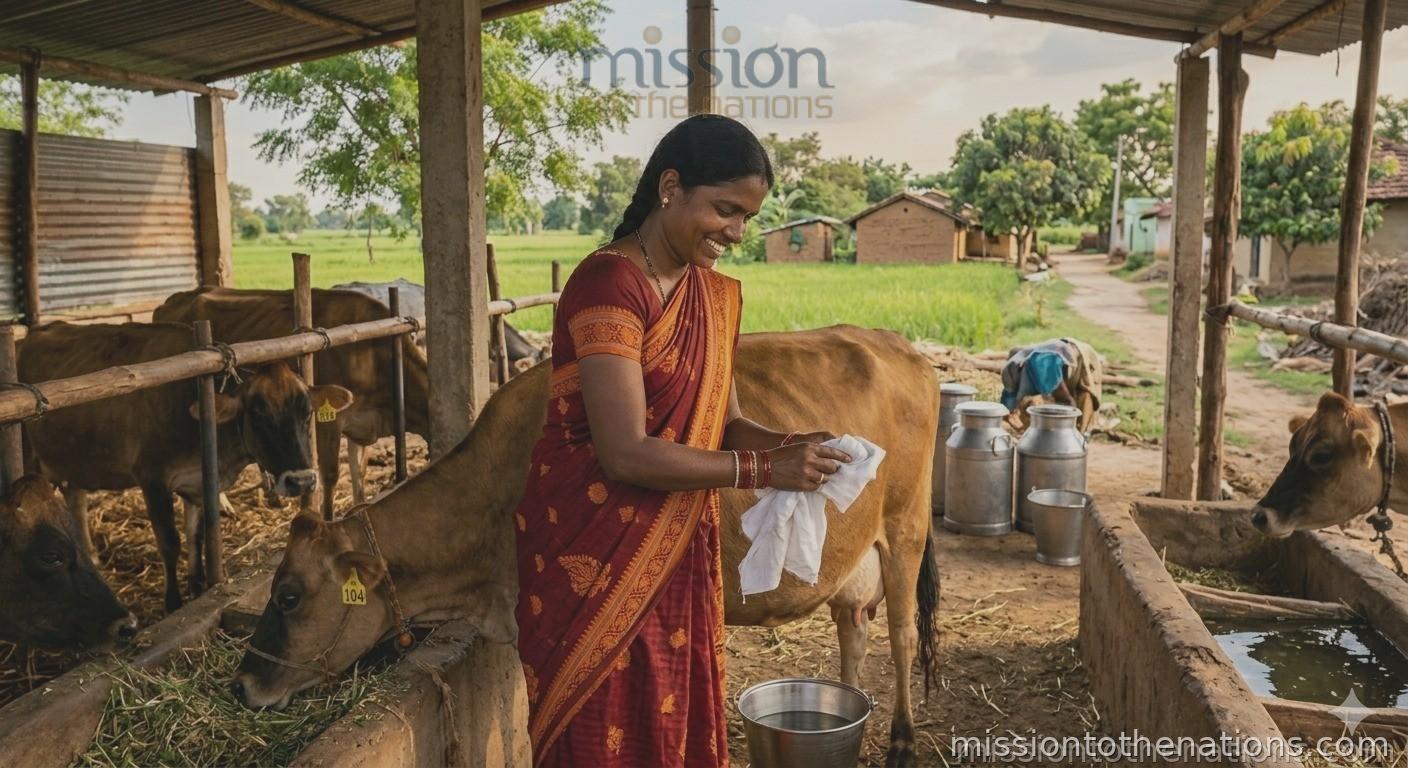
Ruth buried two children before she was thirty. Then she learned to read a cow the way you read weather.
Her husband left after the second child died. She raised her daughter alone on fieldwork with nothing to her name. A cattle cooperative changed what that meant.
“I did not think I would ever buy anything new again.”
The field worker came to Ruth's village on a Tuesday. He sat under the same tree where she had sat for years waiting for work that did not always come, and he told her about the cattle cooperative. She listened. She did not believe him.
She had buried two children. Her husband had left after the second one died — he said it was her fault for being unlucky, and he left, and she did not see him again. She had her daughter and whatever fieldwork she could find. Some mornings the work was there. Some mornings it was not. On the mornings it was not, there was no food.
She joined the cooperative because she had no other option. That was the honest reason. She did not join because she believed it would work. She joined because not joining felt exactly the same as staying where she was, and staying where she was was something she could not afford to keep doing.
Within six weeks she was managing part of the herd.
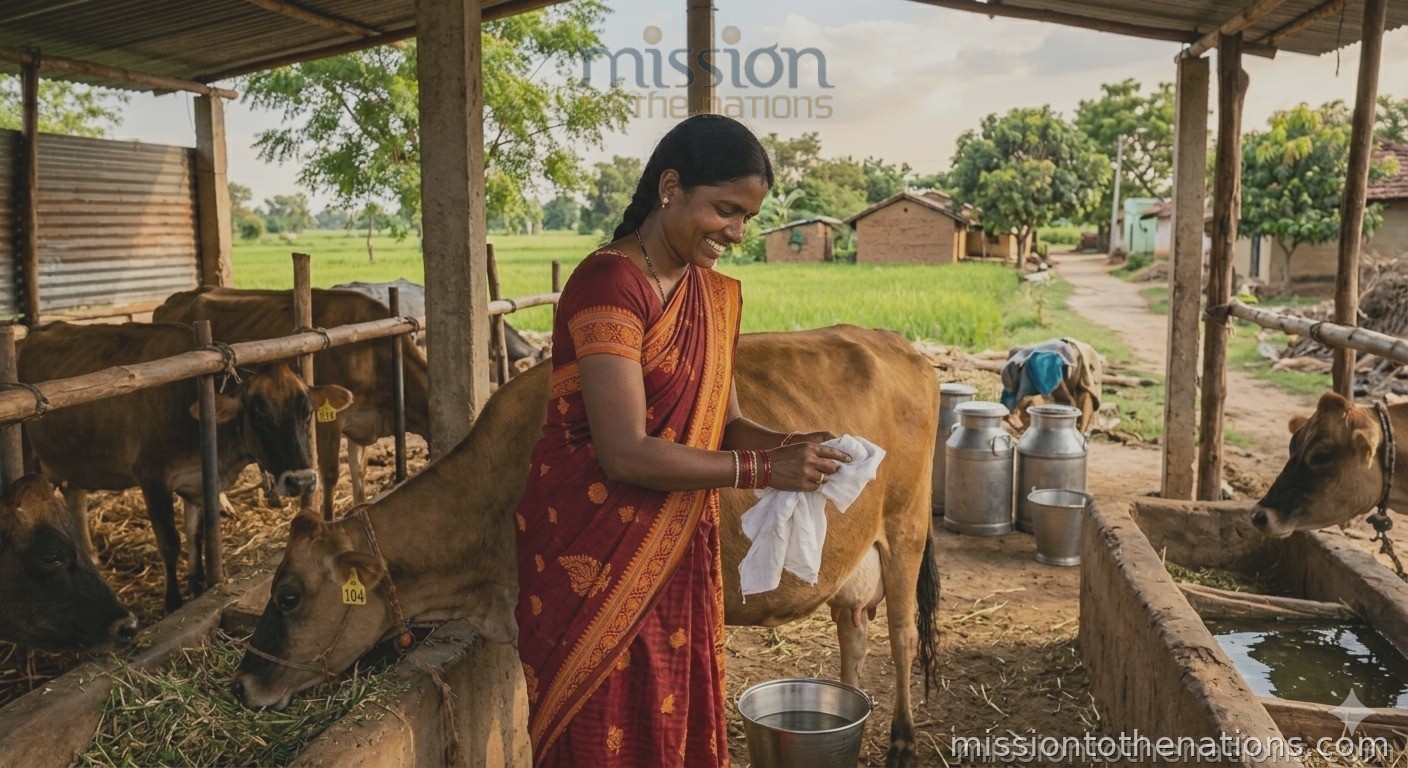
No one had taught her about cattle before. She learned by watching, then by doing. She learned to read an animal the way you read weather — which ones were off their feed, which were healthy, which needed watching. She learned to record yields. She learned which milk went to the children's home first, and how to account for the surplus. She learned that surplus meant income, and income meant a number she could plan around.
She earns ₹6,500 a month now. More in good months.
Last year her daughter finished school. Ruth was there. She wore a new sari she had bought herself — the first new thing she had bought in years. She told the field worker about it afterward, quietly, the way you tell something to someone you trust. She said: I did not think I would ever buy anything new again.
Her herd feeds the children at MTN's home. The milk goes to them first, every morning. The surplus she sells. One cooperative does both — feeds children who have nothing, and gives a woman who had nothing a reason to get up before dawn and go to work that is hers.
- •Lost two children before age 30; husband left after the second death, blaming her for being unlucky
- •Raised her daughter alone on daily-wage agricultural fieldwork — unpredictable, underpaid
- •Some mornings there was no work. On those mornings there was no food.
- •Had never owned anything of her own
- →Referred to MTN's cattle cooperative by a village field worker
- →Did not believe it was real at first — joined because she had no other option
- →Within six weeks was managing part of the herd: feeding, milking, recording yields
- →Learned to assess animal health — which were off, which were healthy, how to track condition
- →Milk goes to MTN's children's home first; surplus sold at market price
- ✓Earns ₹6,500 a month — more in good months — from milk surplus sales
- ✓Daughter completed school; Ruth attended graduation in a new sari she bought herself
- ✓First purchase of anything new in years: 'I did not think I would ever buy anything new again'
- ✓Her herd feeds the children's home. Her income feeds her family. One cooperative does both.
Name has been changed to protect privacy. Statistics are reported by programme teams and reviewed at our annual audit.